Guides
Fifteen self-storage location types, and the method for judging them fairly
Fifteen self-storage location types set side by side, with the comparison method, because no honest page can rank named sites it has never surveyed.
What to take away
- Fifteen self-storage location types follow, each named, each checked against the same seven columns.
- This page does not rank named sites. Ranking sites it has never surveyed would be invention, and the companies, towns and data sources it names come from public filings, industry counts and government tables.
- Fill every column for every candidate, or the comparison stops being one.
- The two columns that decide most cases are competing doors in your size bands and rentable square feet per acre.
- A type that suits one operator suits another badly. Match the type to the model you can actually run.
Why this page names companies and towns but ranks no sites
A ranking of real locations would need current door counts, current rents and current permitting activity for every one of them, gathered at the same moment and by the same method. Nobody publishes that. A page that asserts it anyway is guessing in a confident voice.
So this page does the checkable thing instead. The fifteen types below are illustrated with real operators, real data sources and real markets drawn from public records: company filings, the Census Bureau, state transportation department traffic counts and local planning offices.
Each example tells you what to measure on your own candidate before you believe either the argument for the type or the way it usually fails.
The comparison columns
Use the same columns for every candidate, whatever type it is.
Seven comparison columns
- Drive-time catchmentmap at customer hour
- Competing doors by size banddrive and call
- Permitted supplylocal planning office
- Rentable square feet per acrerough site plan
- Land cost per rentable square footdivide
- Visibility from working roadstand there
- Zoning pathask, do not read map
How to fill it
- Drive-time catchment (Google Maps travel time, or Esri ArcGIS Business Analyst rings)
- Map, at the hour customers come
- Competing doors by size band
- Drive and call, count doors
- Permitted supply (local planning office, plus Yardi Matrix and Radius+ pipeline reports)
- Ask what is approved and what has broken ground
- Rentable square feet per acre
- Rough site plan
- Land cost per rentable square foot
- The above, divided, then compared with local comps
- Visibility from the working road
- Stand there
- Zoning path
- Ask, do not read the map
Why it decides things
- Drive-time catchment (Google Maps travel time, or Esri ArcGIS Business Analyst rings)
- Radius overstates it wherever barriers exist
- Competing doors by size band
- Facility counts hide mix shortages
- Permitted supply (local planning office, plus Yardi Matrix and Radius+ pipeline reports)
- A permitted building competes with your lease-up
- Rentable square feet per acre
- Two equal parcels rarely yield equally
- Land cost per rentable square foot
- The cheaper parcel is often the dearer one
- Visibility from the working road
- Substitutes for a large share of paid demand capture
- Zoning path
- Permitted use and conditional use are different projects
Land drives that fifth column harder than construction does. Typical US ranges as of 2026 run about $3 to $12 per square foot on suburban fringe land and $30 or more for infill urban parcels.
Test your own market rather than trusting that spread. The same site plan turns either number into a very different rent per unit.
Fifteen self-storage location types, each with a named example and a check
- Arterial corner with signalized access.Signalized corners carry the highest land prices and the easiest turns. Public Storage, the Glendale, California REIT with roughly 3,000 US facilities, has built its portfolio around high-visibility arterial sites. Retail zoning may exclude storage outright, so read the use table before you price the dirt.
- Arterial mid-block without a signal.Cheaper dirt, and the left turn in becomes the site's quiet enemy. Texas DOT and Caltrans publish free traffic count maps that show turning volumes at nearby intersections. Watch the median: a divided road with no crossover pushes customers to the next light and a competitor.
- Highway frontage at the edge of town.Visible to many, convenient to few. U-Haul, with about 2,200 company-owned stores in the US and Canada, pairs interstate frontage with truck rental to pull customers past the edge of town. Test the drive time against Census Bureau household counts before you credit the traffic.
- Industrial park interior.Cheap land and simple zoning, invisible to everyone. National Storage Affiliates, the Greenwood Village, Colorado REIT with about 1,000 properties, runs many stores under regional brands from low-visibility positions. This type lives or dies on demand capture, so budget for paid search and map listings instead of drive-by.
- Infill conversion of a vacant big-box store.The shell already exists, so column spacing, floor loading and fire separation decide whether the layout works. Retail vacancies in metros such as Cleveland, Memphis and Birmingham keep producing these shells. Confirm sprinkler and separation rules with the local fire marshal before you sign.
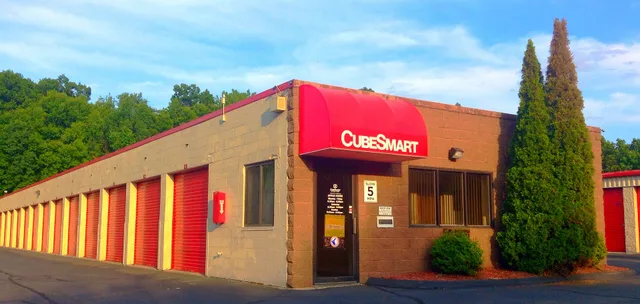
- Multi-story urban infill.High rent per square foot, expensive vertical circulation, and an elevator that becomes a single point of failure. CubeSmart, based in Malvern, Pennsylvania with more than 1,300 stores, runs multistory sites in dense markets including New York and Washington. Price a service contract before you count the rent premium.
- Apartment-dense residential edge.Reliable small-unit demand and limited parking for the trucks customers arrive in. Apartment owners publish turnover rates in their filings, and Equity Residential and AvalonBay report them every quarter. Count stalls for a 26-foot truck beside the car spaces you are required to build.
- Suburban tract housing edge.Garages compete with you, so demand skews to life events: moves, deaths, divorce, downsizing. Census Bureau American Community Survey tables give owner-occupancy by tract, which shows how much garage space sits next door. Underwrite shorter stays than in renter-heavy areas.
- Small-business corridor.Longer stays, larger units, more vehicle traffic, and access-hour expectations a household customer does not have. Extra Space Storage, based in Salt Lake City, merged with Life Storage in 2023 and now oversees more than 3,500 stores, and it markets commercial accounts alongside household rentals. Budget for attended hours and a loading area.
- Rural highway junction.Little competition and a thin catchment. StorageMart, headquartered in Columbia, Missouri, runs rural and small-metro stores across the US and Canada under one brand. Keep the mix conservative and the build cheap, because the lease-up cannot carry a fancy building.
- Behind a retail center, on the second row.Poor visibility, better price, and dependence on the signage rights you negotiate. A pylon sign on the primary road often costs less than the land premium for a front-row parcel. Write the sign right into the purchase contract or the lease.
- Adjacent to a rail or river barrier.Read the crossings before the population figure. Half the credited catchment may never cross the tracks or the water. FEMA flood maps and the FHWA National Bridge Inventory show both the crossing count and the flood zone, and flood insurance changes the pro forma.
- Fringe of a growth corridor.Attractive on projections and exposed to the supply those same projections attract. Austin, Phoenix, Nashville and Charlotte have drawn heavy storage construction since 2020. Count permits, not plans, and note that pipeline reports from Yardi Matrix and Radius+ are revised regularly.
- Redevelopment of an older single-story facility.You inherit the mix, the in-place rents and any deferred maintenance behind the doors. Public Storage and Extra Space Storage have both grown by buying older stores, and door mix plus roof age sets the remodel budget. Walk the drive aisles after rain.
- Ground lease rather than purchase.Lower entry cost and a shorter horizon, which changes what any improvement is worth. A 20-year lease with two 5-year options cannot amortize a 39-year building, the recovery period IRS Publication 946 gives nonresidential real property. Read the term against that life.
How to use the fifteen
Pick the three types your capital and your operating model can actually support, then find candidates of those types and run them through the columns above. The wider screening order sits in how a site is chosen from first map to final diligence, and the head-to-head work that follows is covered in choosing between two finalist sites.
If the candidate is leased, not bought, the clauses matter as much as rent. reading a site lease before signing it is the step most often skipped in a hurry.
If the type points to later phases, check the physical triggers in when to add more units before you commit to a footprint.
The wider-area screen, ahead of any parcel, is set out in how a market is screened.
Three checks that apply to every type
Accessibility is decided in the site plan for all fifteen. Parking, the approach to the office and the route into the building are cheap to draw and expensive to move. The ITE Parking Generation and Trip Generation manuals give reference counts for self-storage land uses.
Three universal checks
- Accessibility decided in site plan
- Parking, office approach, building route
- Staffing hours priced against local wage data
- Write comparison down and keep it
- Lender asks for rejected candidates too
The Department of Justice small business guide to the Americans with Disabilities Act is the reference to give the designer early.
The staffing model differs sharply between these types, and it belongs in the comparison rather than after it. Price the hours each type needs against published wage data for the area rather than a single assumed salary. The Bureau of Labor Statistics publishes wage estimates by occupation and metropolitan area for exactly this purpose.
Finally, write the comparison down and keep it. The Small Business Administration guidance on market research and competitive analysis sets out what a defensible study contains, and a lender will ask to see the candidates you rejected as well as the one you chose.
Common questions
Why not just rank the best towns?
Because doing it honestly requires current door counts and permitting data for every town on the list, gathered the same way. Nobody has that. A page that publishes it anyway is asking you to act on invention.
Do the named companies mean those types are better?
No. Public Storage, Extra Space Storage, CubeSmart, U-Haul and National Storage Affiliates all run several types at once. A name shows the type exists at scale in the market, not that your parcel works.
Which type is safest for a first facility?
There is no safe type, only a match between type and operator. If you cannot fund a long lease-up, avoid types whose demand has to be bought rather than seen. If you cannot staff attended hours, avoid types that need them.
How current does the supply count have to be?
Current enough that no permitted project has broken ground since you counted. Recount before you close, not before you offer.
Can a good type rescue a bad parcel?
No. Type describes the setting. Zoning, buildable area, access and yield describe the parcel, and those are what actually fail.